I Compared the Realistic Options Before Picking an Online Betting Platform
I Compared the Realistic Options Before Picking an Online Betting Platform
My cousin called me last Friday night, frustrated. He had spent three hours bouncing between betting apps, downloading one, deleting another, and still had no idea which platform was actually worth his time. He asked me a simple question: “How did you decide?” I did not have a clever answer, because my decision was not clever either. It was a comparison. I looked at the realistic options in front of me — the ones actually available to someone in Bangladesh with a mid-range Android phone and a slow home connection — and I picked the one that fit. That platform was tk999, but the point is not the name. The point is how I got there.
What did the realistic options actually look like?
When people say “options” in online betting, they usually mean a list of fifty sites. That is not realistic. A realistic option has to pass three filters before it even counts: it has to load on your phone, it has to accept the payment methods you actually use, and it has to let you register without a headache. Most sites fail at least one of these.
I narrowed my list to four categories. First, international platforms with heavy English interfaces — they work, but the language and the banking steps often do not match what a Bangladeshi user expects. Second, local-facing platforms that market directly to Bangladeshi users and support mobile money. Third, browser-only sites with no app, which are fine on a laptop but painful on a phone. Fourth, app-first platforms where the mobile experience is the main product, not an afterthought.
That fourth category is where I ended up, and it is where most people I know end up too, once they stop comparing marketing pages and start comparing actual usability.
Why does the app matter more than the website?
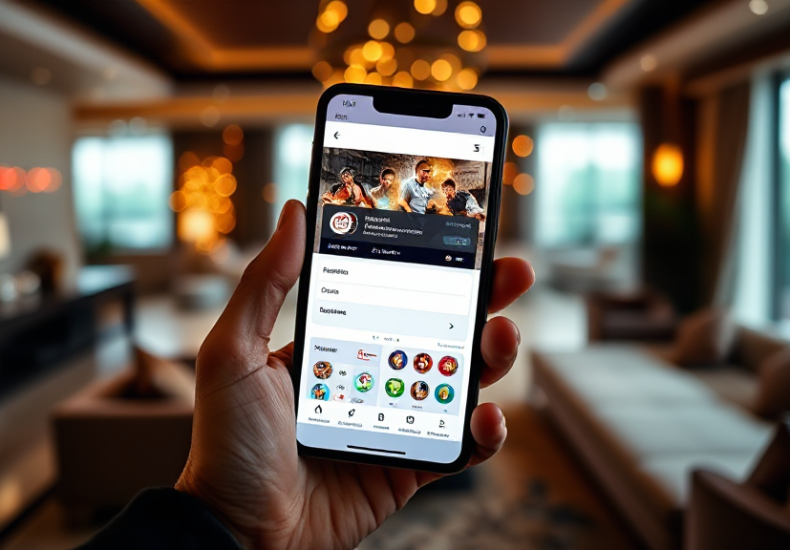
This is the question my cousin kept circling back to. He wanted to know why I cared so much about a downloadable app when the website works fine in a browser. The answer is boring but true: I do not bet from a desk. I bet from a bus, from a tea stall, from a sofa with the TV on. A browser tab that reloads every time the signal drops is not the same product as an app that holds your session.
An app-first platform also tends to have a cleaner registration flow. You install it, you enter your details once, and you are in. There is no hunting for the right page, no re-entering information because a form timed out. For someone who is not deeply technical, that difference is the whole experience.
That said, the app is not automatically better. If a platform has a great app but no clear way to deposit, the app is decoration. The app only matters when the rest of the system — registration, payment, account access — is built to support it.
How did registration and payment compare across options?
Registration is where most platforms reveal their real audience. A site built for a global user will ask for documents and card details that a Bangladeshi user may not have ready. A site built for this market will ask for the things people actually have: a phone number, a name, and a mobile wallet or bank account.
When I tested the options, I timed each registration. The international sites took me between eight and fifteen minutes, mostly because I had to stop and figure out what a field was asking for. The local-facing ones took three to five minutes. The difference was not the number of fields. It was whether the fields matched my reality.
Payment followed the same pattern. A platform that supports the payment methods people in Bangladesh actually use removes an entire layer of friction. A platform that does not support them turns a two-minute deposit into a twenty-minute problem. If you are comparing options, this is the single most useful thing to test before you commit.
What did I get wrong the first time?
I picked a platform based on its homepage. That was my mistake. The homepage looked polished, the promotions were loud, and I assumed the rest of the product matched. It did not. The app was slow, the registration form kept resetting, and the deposit page did not support the wallet I use every day.
The lesson is not that polished homepages are bad. The lesson is that a homepage is a marketing surface, not a product. The product is the registration flow, the app, the deposit page, and the account dashboard. If you only compare homepages, you are comparing advertisements, not platforms.
My second mistake was assuming that more features meant a better platform. In practice, the platforms with the longest feature lists were the ones I used least, because the core flow was buried under menus. The platform I kept coming back to was the one where the core flow was obvious.
Which option actually fit a normal user?
After all that testing, the answer was the app-first, locally focused option. It registered in under five minutes, it supported the payment methods I use, and it did not fall apart when my connection dipped. That is the entire reason I stayed. There was no single feature that won me over. It was the absence of friction across the whole process.
This is also why I tell friends to compare options by walking through the full flow, not by reading reviews. Reviews tell you what someone else valued. The full flow tells you whether the platform fits you. Open the registration page, check the payment options, install the app, and see how it behaves on your own phone. That test takes twenty minutes and saves you weeks of frustration.
If you are doing that test right now, start with the platform that markets directly to your market and builds for mobile first. That is the realistic option for most users, and it is the one that tends to hold up over time.
What should you check before you commit?
Before you commit to any platform, run through a short checklist. Does it load quickly on your phone? Does registration ask for information you actually have? Does it support a payment method you already use? Does the app stay logged in when your connection drops? Is there a clear way to reach support if something goes wrong?
If a platform passes all five, it is a realistic option. If it fails two or more, keep looking. This is not about finding the perfect platform. It is about avoiding the ones that will waste your time. The best platform for you is the one you do not have to fight with.
One more thing: do not let a single bad experience with one platform convince you that all platforms are the same. They are not. The differences are in the details — registration speed, payment support, app stability — and those details are exactly what you should be comparing.
FAQ: Common Questions About Choosing a Betting Platform
Is a downloadable app always better than a website?
No, but it usually is for mobile users. An app holds your session, loads faster, and handles weak connections better than a browser tab. If you mostly bet from a phone, the app-first option is the more realistic choice. If you only use a laptop, a browser-based platform can work just as well.
How long should registration take on a good platform?
For a platform built for your market, registration should take under five minutes. If it takes longer, the fields probably do not match what you actually have. That is a signal to keep comparing.
What is the biggest mistake people make when comparing options?
Judging a platform by its homepage. The homepage is marketing. The product is the registration flow, the app, and the payment page. Test those instead, and you will get a much more accurate picture.
Do I need to test more than one platform?
Yes. Testing two or three options takes about twenty minutes each and gives you a real basis for comparison. Without that, you are guessing based on someone else’s opinion rather than your own experience.
Leave a Reply